Thursday, June 30, 2016

Edible Umbelliferae - seedlings.

Umbelliferaceae is quite a varied family of plants. Many are edible, some are violently toxic and many are ornamental. They also provide wonderful nectar and pollen for beneficial insects, that like to land on the umbels of flowers for a feed and a rest.

When they are young, it can be a bit difficult to tell which seedling is which. I happen to have a few at the moment so here are a few pictures to help. 

Of course, if you can't tell, then have a little nibble.


Dill. Fine leaves, not as fine as fennel.

Dill. A slightly more dull green.

Carrot - wider than dill or fennel, pointed tips on each bit of the leaf.

Carrots. Quite pointy at the tips

Celery. Rounder ends to leaf tips than parsley. Stems are flatter too, even at this young stage.

Flat leaf/Italian parsley. Leaf tips are slightly more divied than the celery leaf.

Florence fennel/bulb fennel. See the tiny bulb developing on this seedling.

Fennel foliage. Very fine, tends to droop a little.

Coriander. More obvious leaf venation and larger surface area undivided.
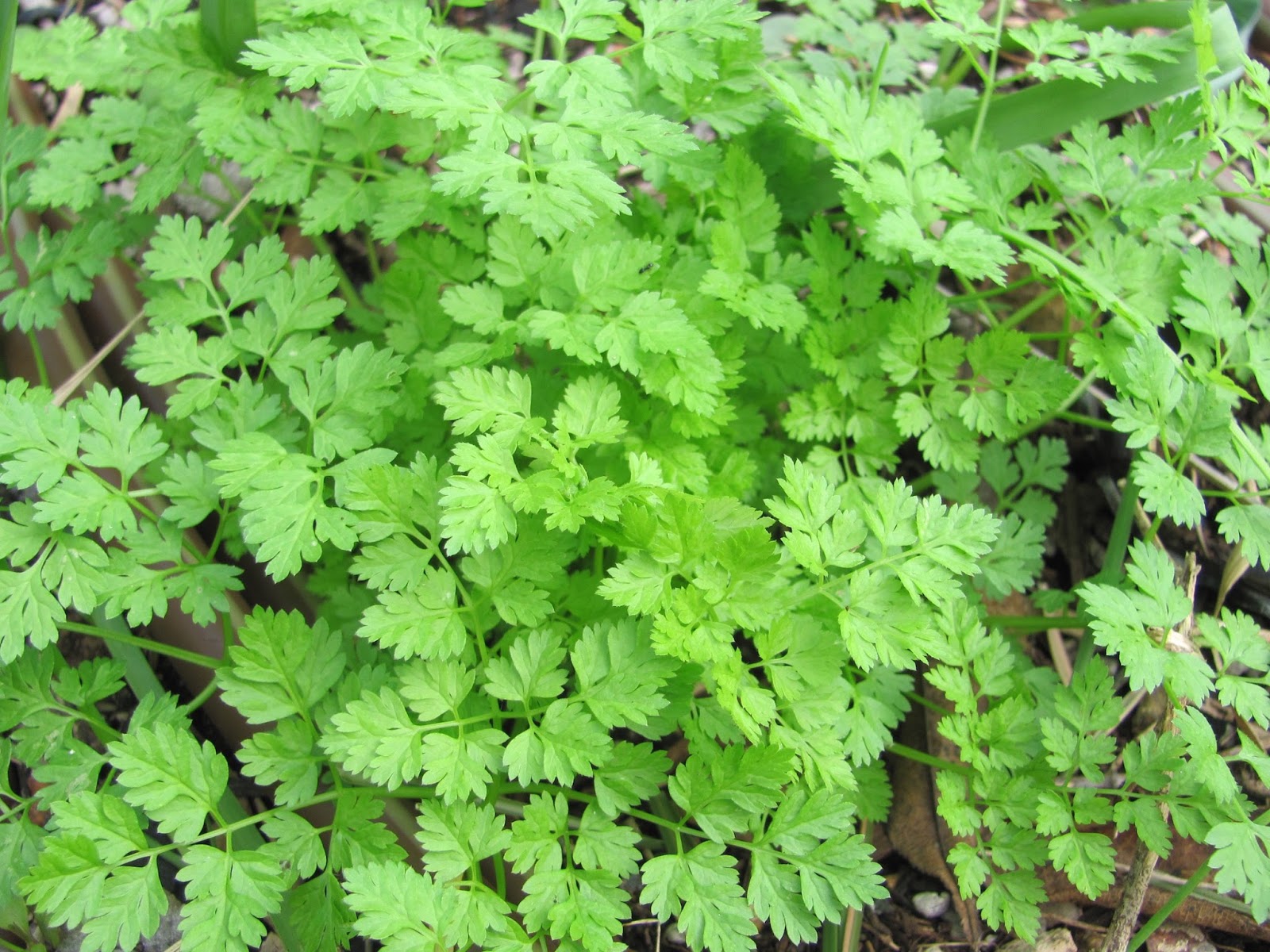
Chervil. Very fine leaf and very divided. Larger gaps between the three leaflets than coriander or parsley.


Thursday, June 16, 2016

Permaculture tales: Trees too big for backyards.

Our little sanctuary on the hill has been rented by us for almost 20 years..  in that time we have planted a LOT of different plants, including a LOT of different trees. Most were Acacias, so they came and went fairly easily, mulched or turned into firewood.

Then there were the two large, deciduous trees we planted early on when we moved in. Paulownia and Gleditsia are both excellent trees with many uses. Beautiful shade and flowers and the leaves drop, letting in winter sun and feeding the soil, but wow, did they get big quick!


After a few years of way too much shade and the trees stealing all the water from our vegetable patch came the realisation that they had to go.  We knew there would be issues with suckering so had that to look forward to for at least a year before it stops trying to fill the entire garden with itself. The Paulownia can also sucker but seemed less likely to cause problems.


We invited a friend to come and cut them down for us. He had some chainsaws he had found at the swap meet and fixed so was keen to test them.

Once we had the stump of the honey locust (Gleditsia) we decided to try a tactic someone had suggested for killing off a suckering tree.

The idea is to cover the stump with charcoal and let it burn as far down as you can. Normally more likely done with dry stumps but we wantted to mess it up as much as we could without using herbicide (that comes later).

Fresh Gleditsia stump
Cutting a grid to leat heat in.
The grid
BBQ coals
These things burnt for hours.
Next morning after fire.
Still lots there. Not sure if it really did much.

Then there were the suckers that came up everywhere. Some we chopped, easy ones we pulled. Difficult or thick ones I cut and dabbed with glyphosate, using it for it's best use, precision application. 
Not all over crops.


Suckering suckerers
Little suckers.

About a year later.

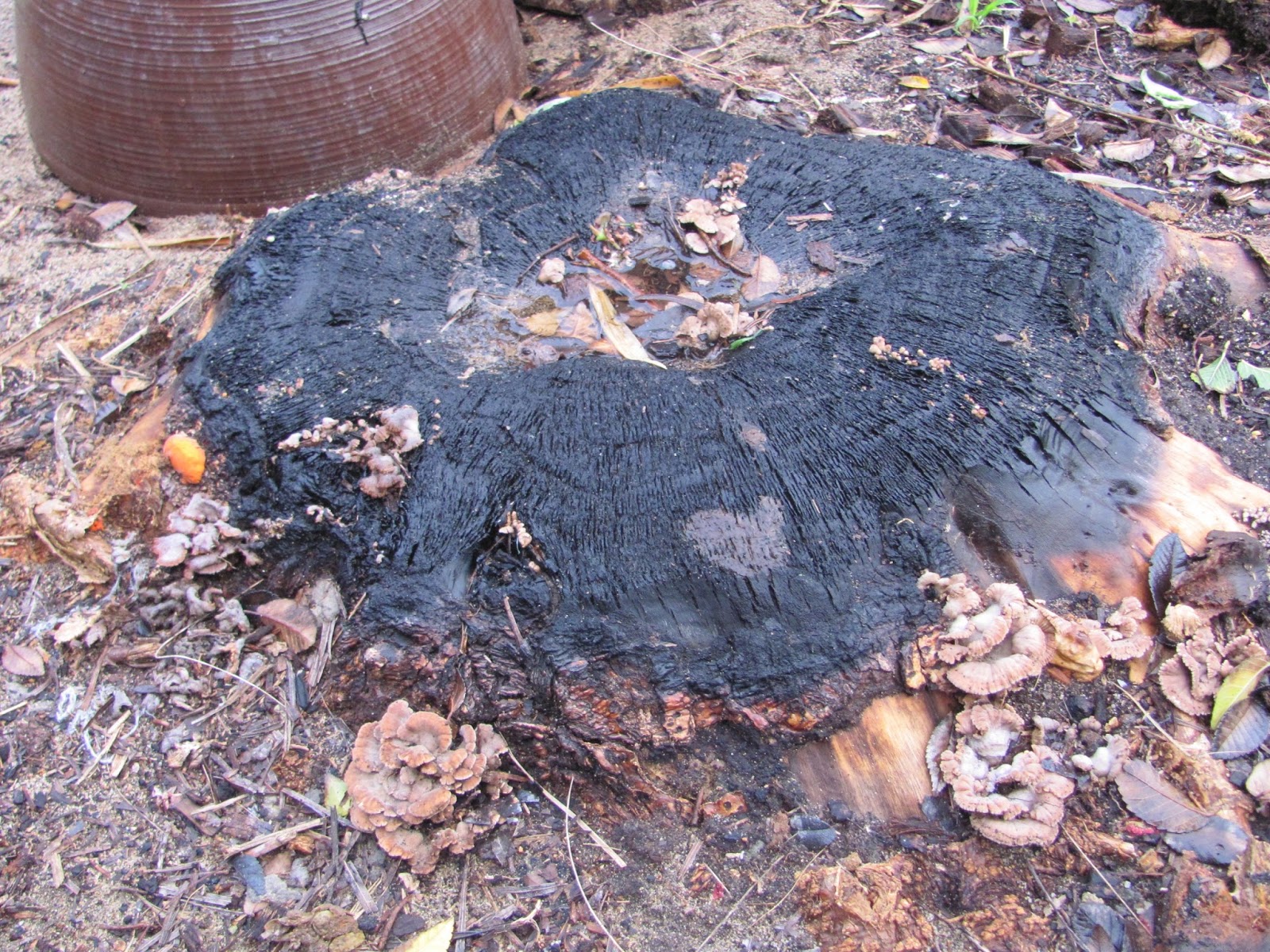
Fungi on the stump.
Not looking too happy.

There are now three different kinds of fungus growing on the stump, starting to decompose it.


Now we wait and see what it does next spring and summer, see if they pop up anywhere unexpected.


Monday, April 25, 2016

Two greyhounds = less lawn.

Summer is over.. I can crawl back outside and be in the garden without feeling ill from overheating! Hooray.


Leucaena seeds gathered by rain.
I have been pruning things to let more sun in, gathering awkward greenwste for the quarterly collection, an excuse to remove a large but ugly Acacia saligna from the front yard. But now I have to  try and fill the gap, see the wonky fence pic below.

Trying to hide the road.
 A bit of fruit has managed to happen in the garden and some useful herbs, such as basil and mint survived summer.

Tiny happy mandarine shrub.
We also adopted a second greyhound after fostering her for a month or so. Which means I am trying to move the garden edges out further to allow the dogs room to run around and just for a change of space when looking out the window.

Spot the houndie.
 Ziggy loves a good dig in a sand pit.  Ziggy the digging greyhound

Prostrate rosemary.
While many of the pests have gone since the removal of the honey locust and powton trees the rodents are still around. We found a couple of dead ones when we came home from a trip away. I have also tried to remove many of their hidy holes in the garden, but they still get in our roof.

Rodents have eaten the kale.
There is lots more room without the two trees. They made wonderful summer shade but were sucking the useful garden area dry and casting too much shade. The honey locust has been suckering a lot though, so we had to use judicious amounts of glyphosate for spot treatment. It will be an ongoing effort, but that's why we did it now, rather than if we ever get kicked out of here.

Ziggy the greyhound. 
In some cases we have finally started to plant some of the potted plants into the ground. They won't be happy in pots anyway, so we may as well plant them and see what happens.
Moringa planted in the ground. Will it make it?
It's been handy having tough plants and only a few plants to keep alive over summer. The most useful have made it through.

It'd be good if it rained some more, though...

Monday, January 11, 2016

No effort edibles.


Considering how little effort we put into the garden at the moment it is still looking really green out there. I admit to using a bit too much water sometimes but it is our haven and provides homes for many small lizards and insects and the passing birds.
Some food has managed to survive despite us and the rats. Some capsicums grew themselves in a bamboo pot.. we didn't plant them, but they are the best caps we have grown! The rats and the pest moths don't seem to have noticed this pot over here away from the main garden.


The dragon fruit are going really well, lots of flowers and our first fruit is already in the fridge waiting to be eaten.  The dragon fruit cuttings I plonked around the fence and forgot about have now started to flower. Tough plant and good for vertical spaces.


These tiny watermelon looking fruit are a kind of gherkin that tastes like a cucumber. Mouse Melon (Melothria scabra) is it's name and they grow well if you look after them a little bit. I'm not having a lot get fertilised but hoping the bees will learn to check out their tiny flowers.  They are starting to scramble up any vertical part of the vegetable garden, so hopefully we'll get more soon.


Makrut lime leaves are delicious in Thai foods and other Asian cuisine. This little potted tree is much happier now I have given it some protection from the worst of the day's sun.


This plant is brilliant. Trombocino, a type of trailing zuchini. The fruit grow long and have a slightly different texture to zuke. It stays firmer when cooked and is a bit less starchy when eaten raw. 


Mediterranean herbs and some of the hardier ornamentals still look happy enough.
Perennials are the happiest plants out there right now. Starting seedlings is a nightmare at this time of year, with hot days coming. So, as long as I water the pots and turn on the retic every couple of mornings we might still get some tasty treats from the garden.

Monday, December 7, 2015

Hello fellow gardeners..

I am still out here, staring out the window.. the garden is good, the sun is shining. Having injured my shoulders doing horticultural nursery work for many years, I needed a change and have been a bit befuddled for some months about what to do that won't hurt me and uses my fairly vast knowledge of environmental and sustainability issues. It took a while but it seems to have presented itself before me.

I have added a new aspect to my environmental and sustainable work skills. In the interest of educating people not to use so many chemicals in their homes and to reduce chemical use in gardens, I am starting to do some low toxic pest control work with a friend of some years. He has been treating ants and termites and other household pests for years using least toxic and IPM methods and he is probably one of the reasons I am so into bugs, so it is great to have ended up working for his business. (I kind of always thought I would, eventually).

Integrated Pest Management has long been an interest of mine and the next course I attend will cover more IPM than in the past, as the TAFE's finally get to change chemical use towards less toxic answers. I just wish TAFE didn't cost so damn much these days.

I won't add any pictures from work coz it would be pics of ant holes and termites. Not that exciting for most people.

See?