Monday, May 20, 2024

Fleas - how to keep them away.

Fleas love sandy places and hiding under things.

Their eggs can survive for ages until vibration makes them hatch.

Warmer winters means that there's no proper die off  so they manage to overwinter.


1. Your dog get fleas from hanging around sandy areas where other dogs (with fleas) also hang out
 

2. Any flea treatment loses potency as the insects that don't die get a tolerance to that toxin. For this reason, I recommend only using flea treatment if you really Have to, and use different ones each time.
 

3. Vacuum all the dusty corners and bedding where flea eggs can be. Wash their beeding as well.

4. Wash the dog using a gentle soap and warm water. Firstly, make the neck soapy so all the fleas can't rush up onto their head when you start doing the rest of the body. Soap the entire dog from the neck back. Ideally have a person at each end and use a liquid soap so you can sponge the warm soapy liquid onto the dog and access all areas underneath and the tail as well.  

Rinse well and towel dry. Try not to let them roll in dirt and let them back onto their clean beeding that has been drying in the sun!


When gardening began for me and how it ended as a money making option.

When I finished high school , I wasn't the ideal daughter. After hitch-hiking around Australia with an unsavoury boyfriend I came back to Perth and once I had sorted myself a bit decided to go to TAFE.
It started as a Wildlife worker course, but that disappeared so I moved into horticulture.
One of they units was Introduction to Permaculture, being taught by the wonderful Miles Durand, sometimes nicknamed Miles Away as he would drift off into other ideas of how to practice permaculture everywhere.

I learned a lot there and I always felt to glad that I had discovered what i wanted to do while I was young.

Skip a bunch of years, the learning and sharing of lots of info on how to grow things, months of propagating natives and lugging too much soil around awkwardly at a native plant nursery with poor occ health and saftey, and the onset of tendonitis in both shoulders.

Then add Perth summer and sand, too many yearly cycles of repeating the same info to nursery customers and I am now not all that interested in gardening any more. The idea I might end up with aching shoulders takes away some of the gung-ho joy I had of being strong and able to lift heavy things.

ADHD discovery and moving house


 At the start of this year in the hottest part of summer we had to move house. We’d been there for 25 years and grew a lot of biomass and food in that time.

Life had changed a lot in that time. Getting older meant we had less energy to look after the garden and we were both busy running two small businesses we have so it wasn’t a bad time to have to leave the garden behind but it was very sad in some ways. 

The road had become much noisier outside and there were lots more diesel fumes and loud vehicles going past 

A friend took some of the fruit trees and we had a lot of help from other friends taking the shed contents away to their places or the tip. 

So now we move in a more southern suburb in a house we were very lucky to find via a mutual friend with the house owner. Very lucky. 

Just before moving I had been diagnosed with adhd so when we moved in I had just started my meds so I got a lot of work done in the garden here. Lots of pruning and cleaning up needed doing. 

My partner had to learn how to clean the pool so it was useable and not very green. It’s been fun to have a swim and I’m able to do a few laps now. 

Being diagnosed has been really great. I’ve always been a bit of a kook so it’s good to know why. 

One thing has been wanting to write about my experience growing up. I’m not doing much gardening and am distancing myself from the word permaculture as it seems to have become a hokey bunch of ppl who are into conspiracy theories these days. These days regenerative farming is better and there’s also a lot of rewilding going in around the world. 

It’s good to be back. I’ll add some pics  when I get on the computer and off my phone.thanks for reading. 

Diesel Fumes are Killing People

 Diesel Fumes are Killing People


https://thedriven.io/2023/02/24/new-study-reveals-catastrophic-health-impacts-of-petrol-and-diesel-cars/


https://www.epa.gov/dera/learn-about-impacts-diesel-exhaust-and-diesel-emissions-reduction-act-dera


https://www.usnews.com/news/health-news/articles/2023-01-30/stuck-in-traffic-diesel-fumes-may-be-harming-your-brain 


https://www.cancer.org.au/cancer-information/causes-and-prevention/workplace-cancer/diesel

Monday, August 27, 2018

Reducing Single Use Plastic is More than Just Straws.

People are more likely to change a behaviour if they see something graphic to demonstrate how bad something is.
A turtle with a straw up its nose is a horrifying sight. They are not the only species affected by plastic however.

Sea life of all sizes is hugely affected by plastic debris; among that debris is 1000's of straws and bottle lids, cigarette butt ends and billions of other tiny pieces of plastic from all around the world, all mashed together so much that is has become habitat for tiny ocean flora and fauna and at the same time, food for the ocean animals that end up in the stomach of the fish that humans love to eat.

Every single day people with money are buying items that are single use plastics. Bags, packaging, take-away cups, cutlery and plates, sauce packets, cosmetics.. a myriad things I don't even realise exist since I have long been aware of reducing my use of resources and live fairly simply.

Plastic items that are going to be reused many times or will have a long useful life are better. If you don't like the idea of leachates in plastic containers there are many glass  or stainless steel options around these days too.

Less is More
My dad was young during WW2 so he was always frugal and I grew up with the habits of using soap for my hair (thereby avoiding many shampoo bottles) and not buying sugar water drinks (no single use plastic bottles). I'm not really boasting, more saying how easy it is to not make rubbish. I've never been into cosmetics either, so that's a whole lot of stuff I never bought or bought into.


It's really easy to get yourself a set of reusables of whatever you think you need. Good water is available for refilling bottles and there's no reason not to have a reusable bag by now, surely! In parts of Australia, boomerang bags are being made by communities so the public can get the idea and the habit of bringing bags when they go shopping.

And of course, if we all do good things and keep on lobbying governments and corporations we really can make some difference.
Eventually the coal barons will have to die off, surely.


Wednesday, July 27, 2016

Worm composting and all those tiny bits of plastic that get in there.

These are a couple of our worm bins that we use to dispose of our compostable household waste. This is mostly fruit and vegetable scraps, tissues, other paper plus some weeds and lots of dry stuff from the bannah grass we have growing to protect us from the south west wind and afternoon sun.

We prefer this style of worm farming as they can escape the heat or cold if they need to, which they're unable to do in the high rise type set-ups. We're lucky to have somewhere to do this.
The first one is a stack of tyres, piled so they don't have gaps for rodents to enter. It is next to a dwarf almond, which should benefit from it's wormy friends.

Even though I forgot to start this pile with worms, they have managed to get in there and I saw a couple of them near the surface. The yellow stuff is corn meal. We weren't going to eat it and it is a bit alkaline, I think, so the worms like it. Sometimes I throw some garden lime in to balance the pH if it gets too soggy and damp. Finely ground eggshell is also good to add for calcium.
The bannah grass and Acacia leaves make great compost (but we just killed the Acacia, oh well).

This Dalek looking Gedye bin was found somewhere with no lid. This lid is from a Webber cooker, which there are often many of at verge side collections.. It works well as a worm cover as the moisture falls back in. The worms get up around the edge of the bin and lurk about.

 Worms. This is under the Webber lid from the Dalek bin above. We've stopped adding foodscraps to it now, just manky water once in a while, so they can finish it off and then we can empty that one.

Pulling apart the bin is a bit of a progression in that it takes a few goes to get there. If you don't mind cockroaches you can maybe go quicker.
The top layers tend to harbour cockroaches. I let them escape and leave the lid off so that the worms can retreat into the dark. That's when I take a few bucketfuls of the worm goodies and spread them around or put them somewhere out of the sun and rain. Once you expose worms, leave it again for a few hours/days. Then you can collect some more. It gives a few things a chance to move out before you take their home away.
As I rolled the tyres around big clods of worm poo was falling out.. fertilising on the go!! The tyres are going to be moved to a new spot in our front garden to help the hedge grow faster.
This one has lots of roots in it. I'm guessing asparagus, but not sure yet. Have to keep digging.

This is the lower part of the worm bin, it is drier and a bit more aged. Even if the nutrients are gone, this adds humus and structure to the soil when it is added. As you can also see, we eat a bit of chicken. One weird phenomena with these loooong time composts is that as you get closer to the bottom, more and more concentrated layers appear.. eggshells, bits of plastic, some still totally readable and brightly coloured. And allllll the bones.. I did put a dead raven in here at one point.. didn't manage to come across it's skull though in my unruly vermicompost digging.

Now This is the point of my post. All the bits of plastic. Some of these things are obviously plastic but some of the labels are a bit of a surprise. Still shiny and readable. 
Good to see no teabags or the crinkly plastic bags that we were buying salad leaves in for a while. 

This is maybe 5-7 years worth of stuff we have added in to this pile. It's still a bit of a shock though, some of the things that went in there. Only one teaspoon though and no other cutlery, so that's good.
It adds a fair bit of time to having to sort it out though and these little bits of plastic and bones are fiddly to have to pick out. We have a sieve (plastic plant tray with big holes) to help get some of the bones out.

This is not a worm egg. It's a worm poo egg. This shows why it is good to crush eggshells before putting them in. If you rinse the shells when you use them they crush easier when dry and can be pulverised in a blender. 
 

 Look at that lovely texture.. waters in beautifully and is readily used by the soil critters and plants.


Thursday, June 30, 2016

Edible Umbelliferae - seedlings.

Umbelliferaceae is quite a varied family of plants. Many are edible, some are violently toxic and many are ornamental. They also provide wonderful nectar and pollen for beneficial insects, that like to land on the umbels of flowers for a feed and a rest.

When they are young, it can be a bit difficult to tell which seedling is which. I happen to have a few at the moment so here are a few pictures to help. 

Of course, if you can't tell, then have a little nibble.


Dill. Fine leaves, not as fine as fennel.

Dill. A slightly more dull green.

Carrot - wider than dill or fennel, pointed tips on each bit of the leaf.

Carrots. Quite pointy at the tips
Celery. Rounder ends to leaf tips than parsley. Stems are flatter too, even at this young stage.

Flat leaf/Italian parsley. Leaf tips are slightly more divied than the celery leaf.

Florence fennel/bulb fennel. See the tiny bulb developing on this seedling.

Fennel foliage. Very fine, tends to droop a little.

Coriander. More obvious leaf venation and larger surface area undivided.

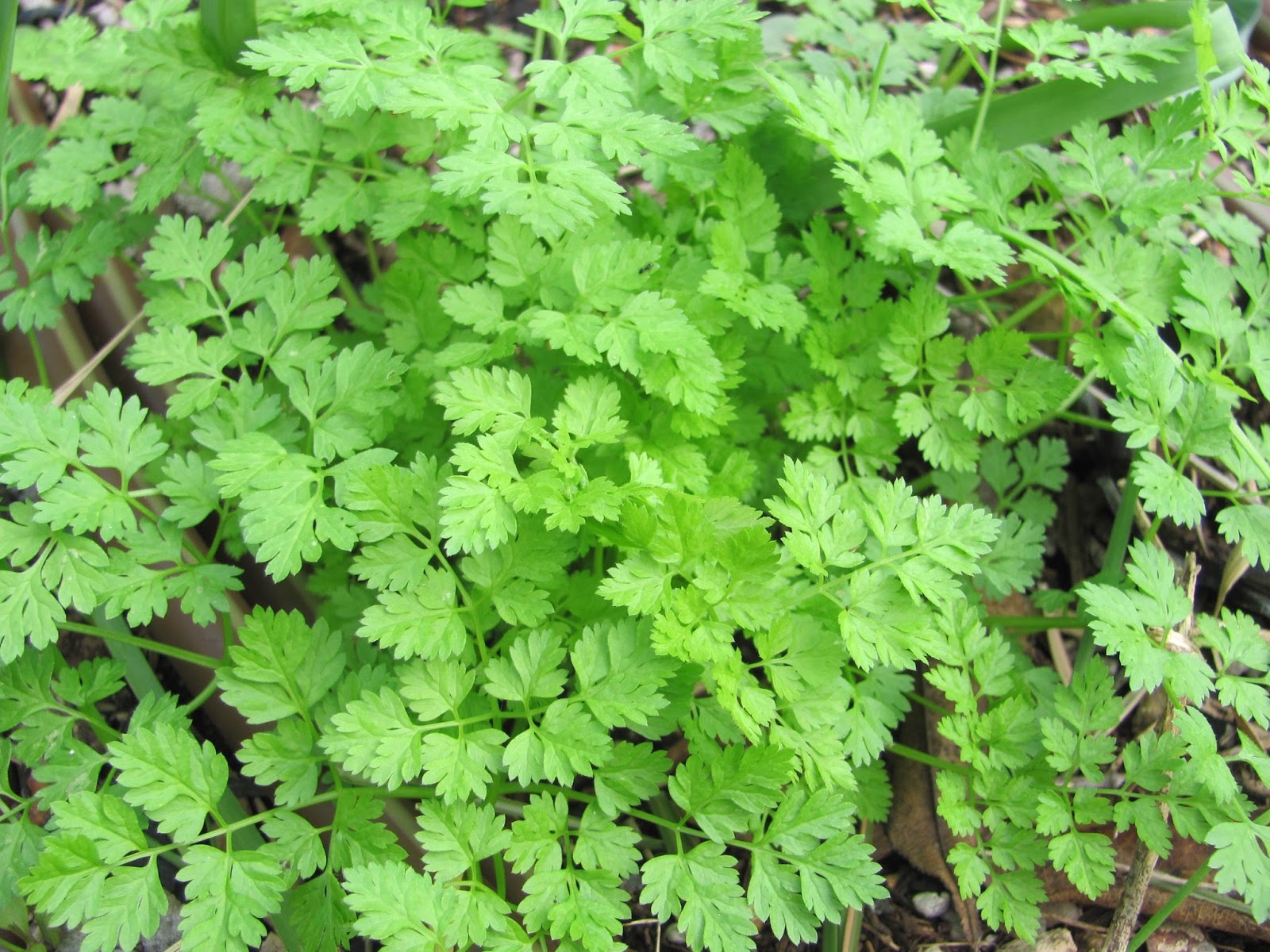
Chervil. Very fine leaf and very divided. Larger gaps between the three leaflets than coriander or parsley.


Thursday, June 16, 2016

Permaculture tales: Trees too big for backyards.

Our little sanctuary on the hill has been rented by us for almost 20 years..  in that time we have planted a LOT of different plants, including a LOT of different trees. Most were Acacias, so they came and went fairly easily, mulched or turned into firewood.

Then there were the two large, deciduous trees we planted early on when we moved in. Paulownia and Gleditsia are both excellent trees with many uses. Beautiful shade and flowers and the leaves drop, letting in winter sun and feeding the soil, but wow, did they get big quick!


After a few years of way too much shade and the trees stealing all the water from our vegetable patch came the realisation that they had to go.  We knew there would be issues with suckering so had that to look forward to for at least a year before it stops trying to fill the entire garden with itself. The Paulownia can also sucker but seemed less likely to cause problems.


We invited a friend to come and cut them down for us. He had some chainsaws he had found at the swap meet and fixed so was keen to test them.

Once we had the stump of the honey locust (Gleditsia) we decided to try a tactic someone had suggested for killing off a suckering tree.

The idea is to cover the stump with charcoal and let it burn as far down as you can. Normally more likely done with dry stumps but we wantted to mess it up as much as we could without using herbicide (that comes later).

Fresh Gleditsia stump
Cutting a grid to leat heat in.
The grid
BBQ coals
These things burnt for hours.
Next morning after fire.
Still lots there. Not sure if it really did much.

Then there were the suckers that came up everywhere. Some we chopped, easy ones we pulled. Difficult or thick ones I cut and dabbed with glyphosate, using it for it's best use, precision application. 
Not all over crops.


Suckering suckerers
Little suckers.

About a year later.

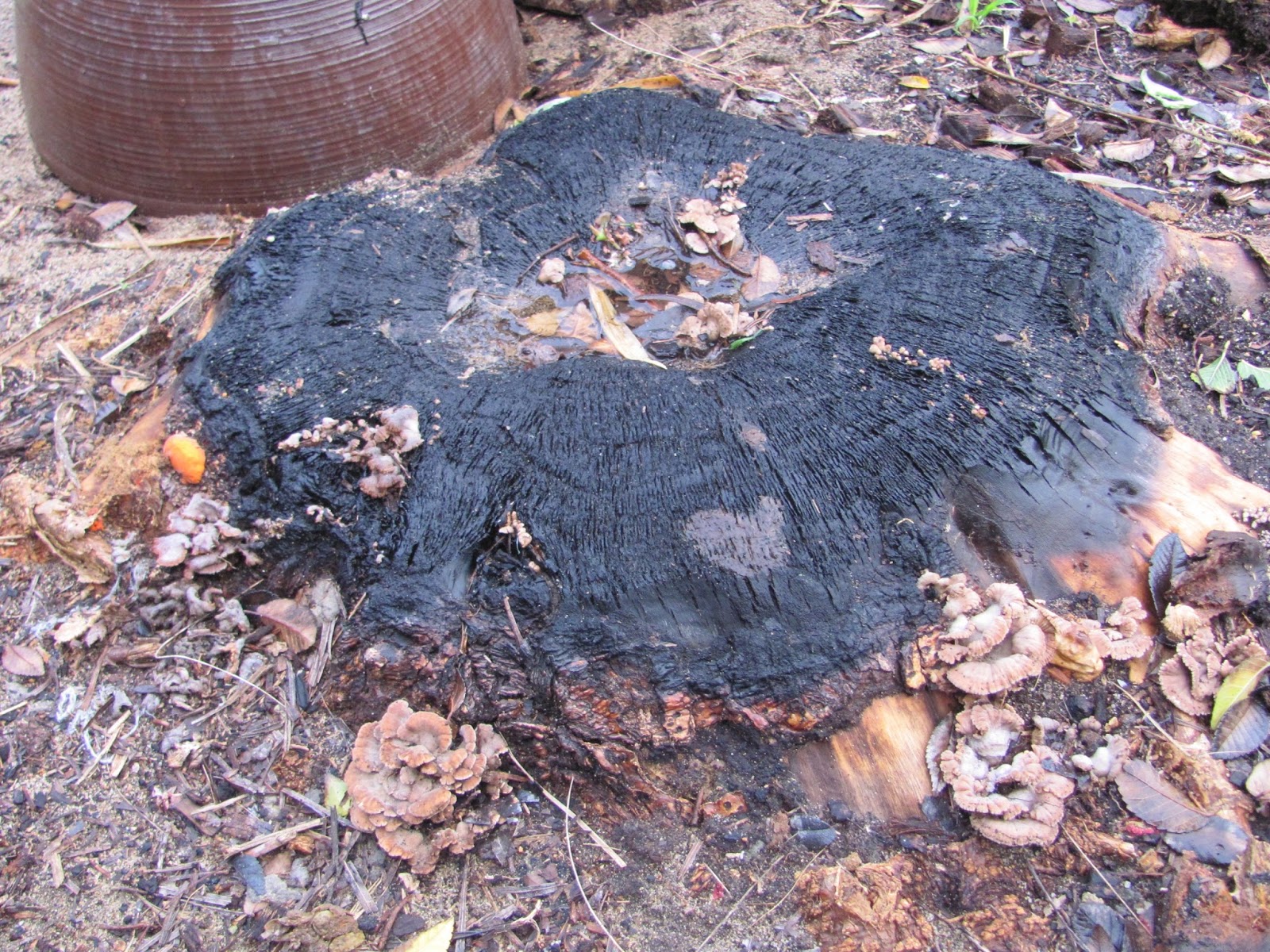
Fungi on the stump.
Not looking too happy.

There are now three different kinds of fungus growing on the stump, starting to decompose it.


Now we wait and see what it does next spring and summer, see if they pop up anywhere unexpected.


Monday, April 25, 2016

Two greyhounds = less lawn.

Summer is over.. I can crawl back outside and be in the garden without feeling ill from overheating! Hooray.


Leucaena seeds gathered by rain.
I have been pruning things to let more sun in, gathering awkward greenwste for the quarterly collection, an excuse to remove a large but ugly Acacia saligna from the front yard. But now I have to  try and fill the gap, see the wonky fence pic below.

Trying to hide the road.
 A bit of fruit has managed to happen in the garden and some useful herbs, such as basil and mint survived summer.

Tiny happy mandarine shrub.
We also adopted a second greyhound after fostering her for a month or so. Which means I am trying to move the garden edges out further to allow the dogs room to run around and just for a change of space when looking out the window.

Spot the houndie.
 Ziggy loves a good dig in a sand pit.  Ziggy the digging greyhound

Prostrate rosemary.
While many of the pests have gone since the removal of the honey locust and powton trees the rodents are still around. We found a couple of dead ones when we came home from a trip away. I have also tried to remove many of their hidy holes in the garden, but they still get in our roof.

Rodents have eaten the kale.
There is lots more room without the two trees. They made wonderful summer shade but were sucking the useful garden area dry and casting too much shade. The honey locust has been suckering a lot though, so we had to use judicious amounts of glyphosate for spot treatment. It will be an ongoing effort, but that's why we did it now, rather than if we ever get kicked out of here.

Ziggy the greyhound. 
In some cases we have finally started to plant some of the potted plants into the ground. They won't be happy in pots anyway, so we may as well plant them and see what happens.
Moringa planted in the ground. Will it make it?
It's been handy having tough plants and only a few plants to keep alive over summer. The most useful have made it through.

It'd be good if it rained some more, though...

Monday, January 11, 2016

No effort edibles.


Considering how little effort we put into the garden at the moment it is still looking really green out there. I admit to using a bit too much water sometimes but it is our haven and provides homes for many small lizards and insects and the passing birds.
Some food has managed to survive despite us and the rats. Some capsicums grew themselves in a bamboo pot.. we didn't plant them, but they are the best caps we have grown! The rats and the pest moths don't seem to have noticed this pot over here away from the main garden.


The dragon fruit are going really well, lots of flowers and our first fruit is already in the fridge waiting to be eaten.  The dragon fruit cuttings I plonked around the fence and forgot about have now started to flower. Tough plant and good for vertical spaces.


These tiny watermelon looking fruit are a kind of gherkin that tastes like a cucumber. Mouse Melon (Melothria scabra) is it's name and they grow well if you look after them a little bit. I'm not having a lot get fertilised but hoping the bees will learn to check out their tiny flowers.  They are starting to scramble up any vertical part of the vegetable garden, so hopefully we'll get more soon.


Makrut lime leaves are delicious in Thai foods and other Asian cuisine. This little potted tree is much happier now I have given it some protection from the worst of the day's sun.


This plant is brilliant. Trombocino, a type of trailing zuchini. The fruit grow long and have a slightly different texture to zuke. It stays firmer when cooked and is a bit less starchy when eaten raw. 


Mediterranean herbs and some of the hardier ornamentals still look happy enough.
Perennials are the happiest plants out there right now. Starting seedlings is a nightmare at this time of year, with hot days coming. So, as long as I water the pots and turn on the retic every couple of mornings we might still get some tasty treats from the garden.

Monday, December 7, 2015

Hello fellow gardeners..

I am still out here, staring out the window.. the garden is good, the sun is shining. Having injured my shoulders doing horticultural nursery work for many years, I needed a change and have been a bit befuddled for some months about what to do that won't hurt me and uses my fairly vast knowledge of environmental and sustainability issues. It took a while but it seems to have presented itself before me.

I have added a new aspect to my environmental and sustainable work skills. In the interest of educating people not to use so many chemicals in their homes and to reduce chemical use in gardens, I am starting to do some low toxic pest control work with a friend of some years. He has been treating ants and termites and other household pests for years using least toxic and IPM methods and he is probably one of the reasons I am so into bugs, so it is great to have ended up working for his business. (I kind of always thought I would, eventually).

Integrated Pest Management has long been an interest of mine and the next course I attend will cover more IPM than in the past, as the TAFE's finally get to change chemical use towards less toxic answers. I just wish TAFE didn't cost so damn much these days.

I won't add any pictures from work coz it would be pics of ant holes and termites. Not that exciting for most people.

See?